Cumberland County North Carolina (Page 2) has 22 places on the National Register of Historic Places including 1 place of National significance and 3 places of Statewide significance. Significant places include Pope Air Force Base Historic District, Oak Grove, Phoenix Masonic Lodge No. 8 and Strange, Robert, Country House and Oates, John A., House.
Several famous people are associated with these Cumberland County historic places including Robert Strange, John A. Oates and John D. Williams.
Some of the country's most noteable architects helped create the Cumberland County places including Stiles Dixon, Stiles S. Dixon, Ruffin Vaughan, Reinecke & Dillehey, Ruffin Vaughn, Reinecke and Dixon, James Waddell, William Deitrick, William C. Holleyman Jr and Christopher Vaughan. Prominent architectural styles found in Cumberland Country are Greek Revival, Classical Revival and Queen Anne.
Historic Significance:
Architecture/Engineering, Event
Architect, builder, or engineer:
Unknown
Architectural Style:
No Style Listed
Area of Significance:
Economics, Military, Architecture
Period of Significance:
1925-1949
Historic Function:
Defense
Historic Sub-function:
Military Facility
Current Function:
Defense
Current Sub-function:
Military Facility
The Pope Air Force Base Historic District, located in Cumberland County, North Carolina, is historically significant as an exceptionally well-preserved representation of early-twentieth-century military aviation planning and architecture. Established in 1919 as Pope Field, the historic district primarily reflects the permanent construction program undertaken by the Army Quartermaster Corps between 1932 and 1934. The district features a highly cohesive collection of contributing resources, including Hangar 4, administrative offices, barracks, and officer quarters. Architecturally, these structures are distinguished by their French Provincial style-characterized by stuccoed walls, steep hip roofs, and symmetrical facades-which was deliberately selected to harmonize with the architectural aesthetic of the adjacent Fort Bragg.
Historically, the district is significant for its instrumental role in the development of United States military aviation, tactical air support, and airborne warfare. Originally used for aerial photography, artillery spotting, and forest fire patrols in the post-World War I era, Pope Field evolved into a critical training facility during the interwar years. During World War II, the base served as a premier site for training troop carrier aircrews and paratroopers, working in tandem with Fort Bragg's infantry to pioneer joint army-air glider and airborne operations. As one of the oldest continuously active installations in the United States Air Force, the Pope Air Force Base Historic District stands as a physical testament to the evolution of American aerial combat doctrine and joint-force military readiness throughout the twentieth century.




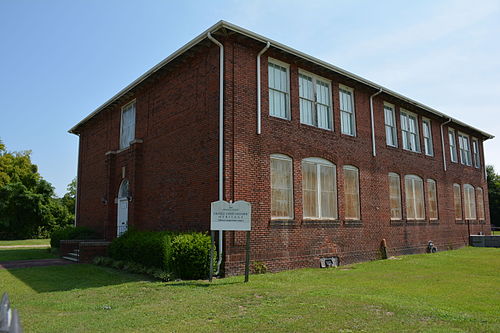









.JPG)


.JPG)


.JPG)

.JPG)