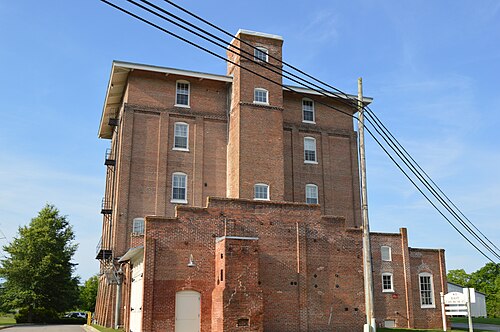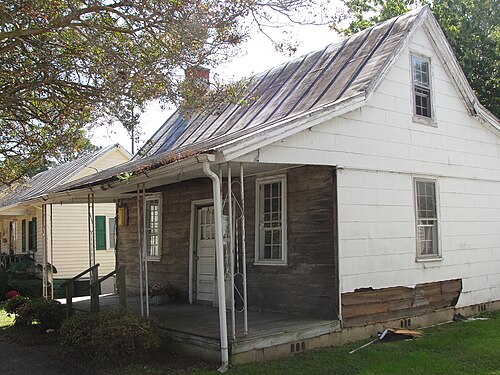
Chowan County North Carolina has 26 places on the National Register of Historic Places including 7 places of National significance and 8 places of Statewide significance. Significant places include Chowan County Courthouse, Cupola House, Edenton Historic District, Hayes Plantation and Iredell, James, House.
Several famous people are associated with these Chowan County historic places including Josua Skinner, Will Oscar Speight and Charles Johnson.
Some of the country's most noteable architects helped create the Chowan County places including William Nichols, UNKNOWN, John Hawks, C.R. Makepeace, Public Works Administration, George L. Borum, Commerce Dept. Bureau of Fisheries, Will Oscar Speight, Badham, Hannibal,, Price, Joseph and et al.. Prominent architectural styles found in Chowan Country are Greek Revival, Federal and Georgian.
Historic Significance:
Architecture/Engineering
Architect, builder, or engineer:
Unknown
Architectural Style:
Georgian
Area of Significance:
Architecture
Period of Significance:
1750-1799
Historic Function:
Government, Landscape
Historic Sub-function:
Courthouse, Plaza
Current Function:
Government, Landscape
Current Sub-function:
Courthouse, Plaza
Constructed in 1767, the Chowan County Courthouse in Edenton, North Carolina, stands as one of the finest and most architecturally significant examples of Georgian public architecture in the United States. Attributed to master builder Gilbert Leigh, this grand two-story English-bond brick edifice features a projecting central pavilion topped by a pediment, a large octagonal cupola, and a beautifully preserved interior courtroom and second-floor assembly room. As the oldest government building in continuous use in North Carolina, the courthouse serves as an outstanding monument to the architectural sophistication and civic pride of the late colonial period.
Beyond its architectural merit, the courthouse holds profound historical significance for its association with the political and legal history of early North Carolina and the American Revolution. It served as a vital meeting place for prominent Revolutionary patriots and statesmen, including Declaration of Independence signer Joseph Hewes, Supreme Court Justice James Iredell, and Governor Samuel Johnston. Designated a National Historic Landmark in 1970, the Chowan County Courthouse remains a powerful symbol of the transition from British colonial rule to American self-governance and continues to stand as a cornerstone of Edenton's historic district.
Historic Significance:
Architecture/Engineering
Architect, builder, or engineer:
Unknown
Architectural Style:
Other, Georgian, Colonial
Area of Significance:
Architecture
Period of Significance:
1750-1799, 1700-1749
Historic Function:
Domestic
Historic Sub-function:
Single Dwelling
Current Function:
Recreation And Culture
Current Sub-function:
Museum
Built around 1758 for Francis Corbin, the land agent for the last Lord Proprietor of North Carolina, the Cupola House in Edenton stands as one of the most architecturally significant and unusual mid-18th-century dwellings in the American South. Distinguished by its striking blend of late Jacobean and early Georgian design elements, the two-and-a-half-story frame structure is renowned for its namesake octagonal cupola, which towers over the roofline to offer views of Edenton Bay. The home features a jettied second story-an overhanging timber-frame construction technique typical of New England and medieval English traditions that is exceedingly rare in Southern colonial architecture. Its interior is equally celebrated for its exceptionally elaborate, fully intact Georgian woodwork, including deeply carved mantels, crown moldings, and a grand staircase, much of which is attributed to local master builder and carver John Hawks.
In addition to its architectural distinction, the Cupola House occupies a pioneering place in the history of American historic preservation. In 1918, facing financial hardship, the home's owners sold the exquisite first-floor Georgian paneling and woodwork to the Brooklyn Museum. In response, local citizens rallied to form the Cupola House Association, purchasing the house to prevent further dismantling and establishing what is recognized as North Carolina's first community-led historic preservation effort. While the original woodwork was eventually replicated for the house, the rescue of the property galvanized the preservation movement in the state. Designated a National Historic Landmark in 1970, the Cupola House remains an invaluable monument to both 18th-century colonial craftsmanship and early 20th-century civic stewardship.
Historic Significance:
Information Potential, Event, Architecture/Engineering
Architect, builder, or engineer:
Et al., Hawks,John
Architectural Style:
Mixed (More Than 2 Styles From Different Periods)
Area of Significance:
Politics/Government, Historic - Non-Aboriginal, Industry, Architecture, Commerce
Cultural Affiliation:
Colonial,Industrial
Period of Significance:
1875-1899, 1850-1874, 1825-1849, 1800-1824, 1750-1799, 1700-1749
Historic Function:
Commerce/Trade, Domestic, Government, Industry/Processing/Extraction, Transportation
Historic Sub-function:
Manufacturing Facility, Single Dwelling, Water-Related
Current Function:
Commerce/Trade, Domestic, Government
Current Sub-function:
Single Dwelling
Established in 1712 and incorporated in 1722, Edenton served as an early capital of colonial North Carolina and grew into a vital political, cultural, and commercial port town on the Albemarle Sound. The Edenton Historic District is of exceptional historical significance for its association with key figures and events that shaped early American history. Notably, it was the site of the famous 1774 Edenton Tea Party, one of the earliest organized political actions by women in United States history, led by Penelope Barker. The town also holds profound significance in African American history as a major hub of the Maritime Underground Railroad and the home of Harriet Jacobs, an escaped enslaved woman who authored the seminal autobiography Incidents in the Life of a Slave Girl, which detailed her life and concealment in Edenton before her escape to the North.
Architecturally, the district represents one of the most intact and outstanding collections of 18th-, 19th-, and early 20th-century buildings in the American South. Spanning Georgian, Federal, Greek Revival, and Victorian styles, the district's tree-lined streets feature several National Historic Landmarks, including the 1767 Chowan County Courthouse-the oldest continuously used courthouse in the state-and the remarkably preserved 1758 Cupola House. Together with St. Paul's Episcopal Church (commenced in 1736) and a wealth of historic residential, commercial, and industrial structures, the Edenton Historic District offers an unparalleled material record of North Carolina's maritime heritage, early civic development, and evolving architectural tastes over more than two centuries.
Historic Significance:
Architecture/Engineering
Architect, builder, or engineer:
Unknown
Architectural Style:
Greek Revival, Federal
Area of Significance:
Architecture
Period of Significance:
1800-1824
Historic Function:
Domestic
Historic Sub-function:
Single Dwelling
Current Function:
Domestic
Current Sub-function:
Single Dwelling
Hayes Plantation, located near Edenton in Chowan County, North Carolina, is widely recognized as one of the most architecturally significant and complete antebellum estates in the American South. Built between 1814 and 1817, the plantation's centerpiece is a magnificent Federal-style mansion designed by the noted English-born architect William Nichols, who later designed the state capitols of North Carolina, Alabama, and Mississippi. The main house features a striking two-story central block flanked by elegant curved colonnades that connect to two-story wings, culminating in a monumental classical portico that overlooks Queen Anne's Creek and Edenton Bay. The estate also retains an exceptional collection of early nineteenth-century outbuildings, including a carriage house, dairy, and stables, all set within a meticulously preserved landscape that reflects the agricultural sophistication of the era.
Historically, the plantation is deeply associated with some of North Carolina's most prominent political and agricultural figures. It was established by Samuel Johnston, a revolutionary leader, member of the Continental Congress, Governor of North Carolina, and one of the state's first two United States Senators. Following his death, the estate was completed and managed by his son, James Cathcart Johnston, a pioneering agricultural reformer who transformed Hayes into a highly successful, diversified farming enterprise utilizing enslaved labor. The mansion housed a legendary library of over 4,000 volumes, serving as a cultural and intellectual hub for the state's elite. Designated a National Historic Landmark in 1973, Hayes Plantation stands as an extraordinary monument to the complex social, political, and architectural history of the early American republic and the antebellum South.
Historic Significance:
Event, Architecture/Engineering
Architect, builder, or engineer:
UNKNOWN
Architectural Style:
Georgian, Federal
Area of Significance:
Politics/Government, Architecture
Period of Significance:
1800-1824, 1750-1799
Historic Function:
Domestic
Historic Sub-function:
Single Dwelling
Current Function:
Recreation And Culture
Current Sub-function:
Museum
The James Iredell House in Edenton, North Carolina, is of exceptional national and state historical significance as the home of James Iredell, Sr. (1751?1799), one of the most influential political and legal minds of the early American republic. Appointed by President George Washington in 1790 as one of the original Associate Justices of the United States Supreme Court, Iredell played a crucial role in shaping the early American judiciary and was a leading essayist and champion of the federal Constitution during North Carolina's ratification debates. His son, James Iredell, Jr., who also resided in the home, went on to become the Governor of North Carolina and a United States Senator. The property serves as a vital monument to the political leadership that guided both North Carolina and the nascent United States during the late colonial, Revolutionary, and Federal eras.
Architecturally, the residence is a premier example of 18th- and early 19th-century timber-frame domestic architecture in North Carolina's Albemarle region. Originally constructed around 1773 as a modest, two-story Georgian-style dwelling, the home was expanded in 1800 and 1827 to its current Federal-style appearance, featuring a distinct T-shape floor plan, double-tier porches, and prominent exterior end chimneys. Now preserved as a centerpiece of the Historic Edenton State Historic Site, the property also includes rare surviving outbuildings, such as an original 18th-century detached kitchen, which provide invaluable insight into the domestic life, labor, and social structures of the early American South.
Historic Significance:
Event, Architecture/Engineering
Architect, builder, or engineer:
Nichols,William
Architectural Style:
No Style Listed
Area of Significance:
Politics/Government, Exploration/Settlement, Architecture
Period of Significance:
1700-1749
Historic Function:
Religion
Historic Sub-function:
Religious Structure
Current Function:
Religion
Current Sub-function:
Religious Structure
St. Paul's Episcopal Church and Churchyard, located in Edenton, North Carolina, holds profound historical and architectural significance as the oldest intact church building in the state and the home of its oldest Christian congregation. Established in 1701 as the first Anglican parish in North Carolina, the current brick sanctuary was constructed between 1736 and 1760 to replace a modest wooden predecessor. The building stands as an exceptional exemplar of colonial Georgian ecclesiastical architecture, characterized by its elegant Flemish-bond brickwork, towering round-arched windows, and simple rectangular plan. Though the interior was rebuilt following a devastating fire in 1949, the church was meticulously restored to its historic appearance, retaining its solemn eighteenth-century character and its iconic nineteenth-century wooden spire.
Surrounding the historic sanctuary is the highly significant churchyard, which serves as a vital repository of early North Carolina and American history. Shaded by ancient oaks, the cemetery is the final resting place for numerous prominent figures of the colonial, revolutionary, and federal eras. Among those interred within its grounds are three of North Carolina's proprietary and royal governors-Henderson Walker, Thomas Pollock, and Charles Eden-as well as James Iredell, one of the original Associate Justices of the United States Supreme Court. Together, the church and its churchyard represent not only a continuous center of spiritual life spanning more than three centuries but also a physical monument to the political, social, and religious leaders who shaped the early American republic.