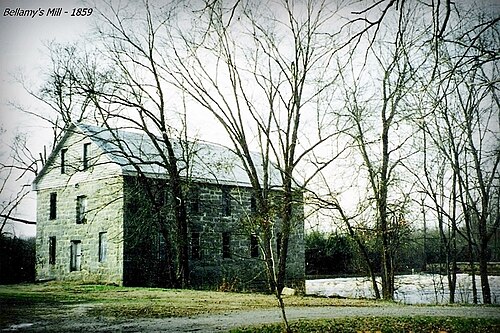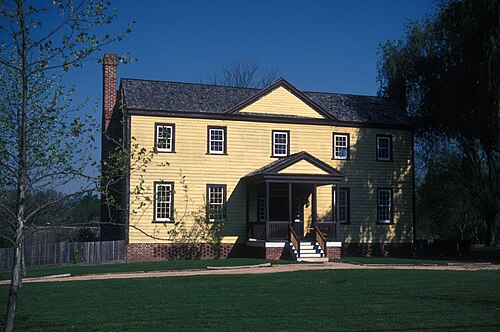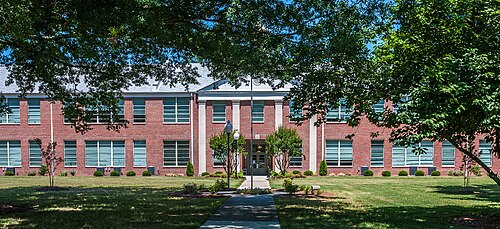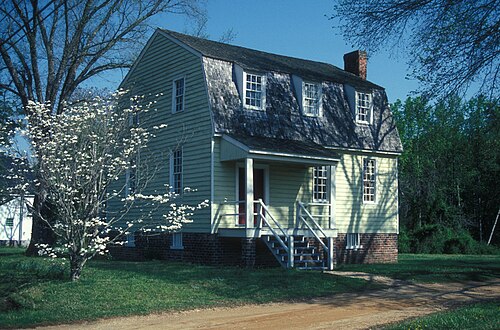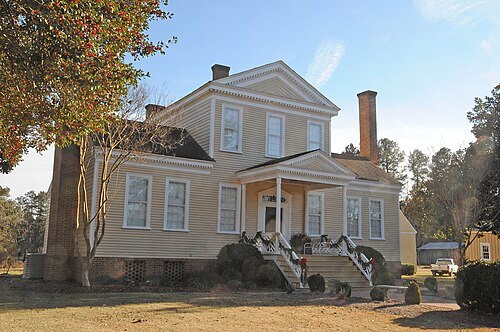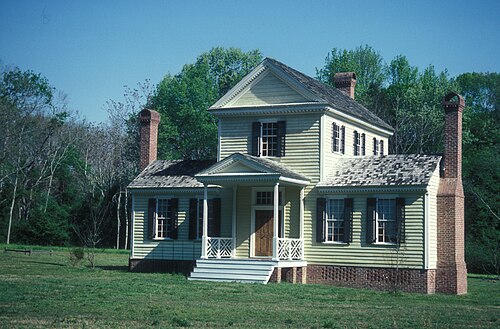
Halifax County North Carolina has 39 places on the National Register of Historic Places including 2 places of National significance and 18 places of Statewide significance. Significant places include Halifax Historic District, Roanoke Canal, Bellamy's Mill, Cellar, The and Church of the Immaculate Conception and the Michael Ferrall Family Cemetery.
Many famous people are associated with these Halifax County historic places including John Joseph I Williams, William R. Davie, Tippoo S. Brownlow, Thomas Person and Joseph Blount Cheshire.
Some of the country's most noteable architects helped create the Halifax County places including Hamilton Fulton, Wheeler & Stern, Edwin Forrest Durang, Joseph B. Cheshire, Hobart Brown Upjohn, Frank B. Simpson, Bottomly, William Lawrence, et al., Jim Johnson, Joseph Blount Cheshire and Benton & Benton. Prominent architectural styles found in Halifax Country are Federal, Greek Revival and Georgian.
Historic Significance:
Event, Architecture/Engineering
Architect, builder, or engineer:
Unknown
Architectural Style:
No Style Listed
Area of Significance:
Politics/Government, Architecture, Commerce
Cultural Affiliation:
American
Period of Significance:
1825-1849, 1800-1824, 1750-1799
Historic Function:
Domestic, Government, Government
Historic Sub-function:
City Hall, Correctional Facility, Single Dwelling, Village Site
Current Function:
Landscape, Recreation And Culture, Vacant/Not In Use
Current Sub-function:
Museum, Park
The Halifax Historic District, listed on the National Register of Historic Places in 1970, is of paramount significance as a major crucible of the American Revolution and early North Carolina political history. Founded in 1757 along the Roanoke River, the town of Halifax served as a vital river port, commercial center, and political hub during the colonial and early national periods. Its most notable claim to national fame occurred on April 12, 1776, when the Fourth Provincial Congress of North Carolina met here and unanimously adopted the "Halifax Resolves." This historic document was the first official provincial action by any of the thirteen colonies recommending a total separation from Great Britain, directly paving the way for the United States Declaration of Independence. Later that same year, the state's first constitution and bill of rights were drafted and adopted in Halifax, establishing the town as the birthplace of North Carolina's state government.
The physical fabric of the district, largely preserved within the Historic Halifax State Historic Site, features an exceptional collection of late-18th and early-19th-century public, commercial, and residential buildings that reflect the town's golden era. Key contributing properties include the Constitution House, where North Carolina's first constitution was penned the 1760 Owens House, representing early middle-class residential architecture the 1783 Clerk's Office and the imposing Royal White Hart Lodge, home to one of the state's oldest Masonic lodges. Together with the Sally-Billy House-a fine example of regional tri-partite Federal-style architecture-and the archaeological remains of the town's early colonial grid, the district offers an evocative window into the political, social, and economic life of the early Roanoke River valley.
Historic Significance:
Event, Architecture/Engineering
Architect, builder, or engineer:
Fulton,Hamilton
Area of Significance:
Transportation, Commerce, Engineering
Period of Significance:
1900-1924, 1875-1899, 1850-1874, 1825-1849, 1800-1824
Historic Function:
Transportation
Historic Sub-function:
Water-Related
Current Function:
Landscape
Current Sub-function:
Underwater
The Roanoke Canal, constructed between 1819 and 1823, represents a monumental achievement in early nineteenth-century transportation and trade in North Carolina. Initiated by the Roanoke Navigation Company as part of the state's "Internal Improvements" movement, this nine-mile-long canal was designed to bypass the treacherous, unnavigable rapids of the Roanoke River fall line near Weldon. By overcoming this formidable geographical barrier, the canal successfully linked the fertile agricultural backcountry of western Virginia and North Carolina to coastal trade networks via the Albemarle Sound. For several decades, it served as a vital commercial artery, facilitating the downstream transport of tobacco, cotton, and grain, while fundamentally stimulating the economic growth and urban development of the region.
Beyond its commercial impact, the Roanoke Canal is of exceptional engineering significance, showcasing the sophisticated stonework and design of early American civil engineering, largely constructed through the labor of enslaved workers. Outstanding physical remnants of this system survive today, most notably the majestic, dry-laid stone locks and the Roanoke Canal Aqueduct-a spectacular 35-foot single-span dressed-stone structure that carried the canal over Chockoyotte Creek. After railroads rendered canal shipping obsolete in the mid-nineteenth century, the canal was dynamically repurposed in the 1890s to generate hydroelectric power, fueling the rapid industrialization of Roanoke Rapids and Weldon. Today, preserved as a historic recreational trail and museum site, the Roanoke Canal stands as a premier monument to the nation's transition from early internal improvements to the modern industrial age.