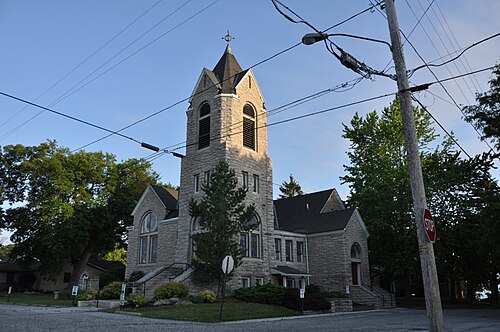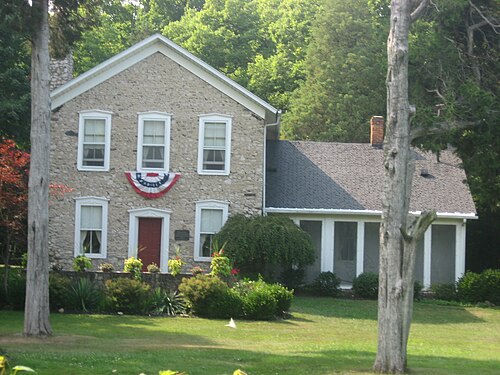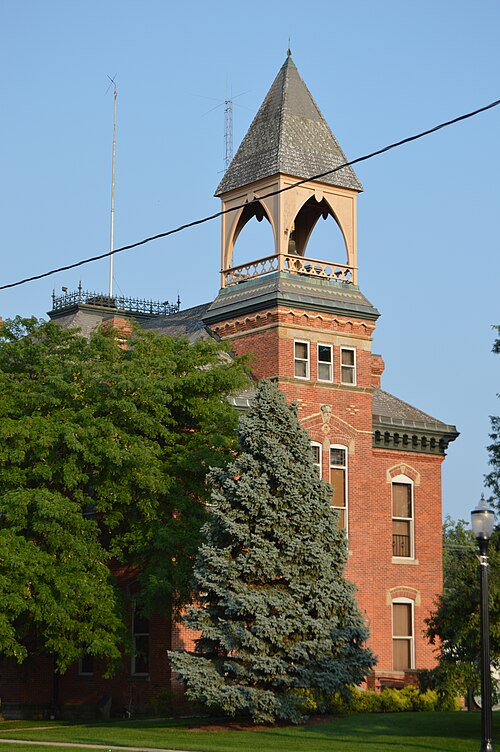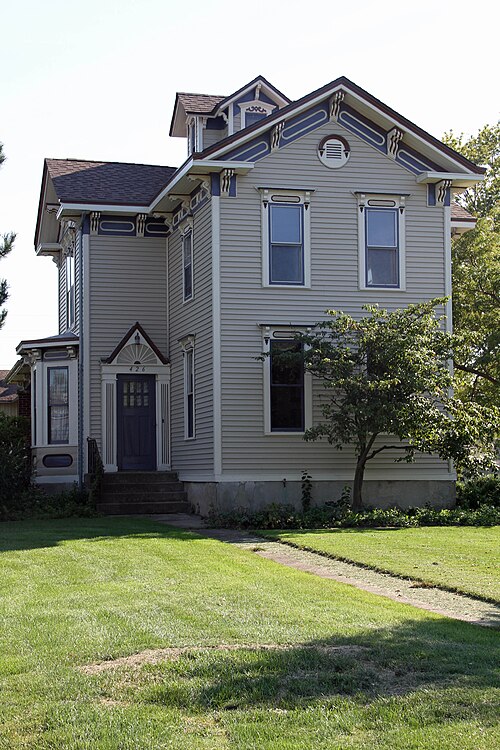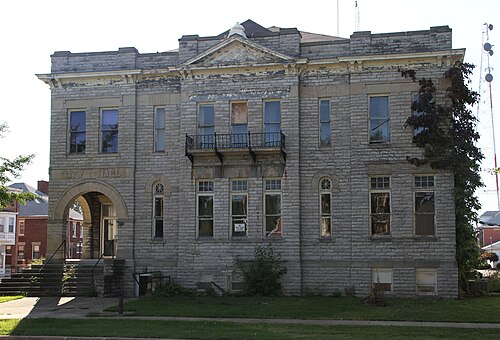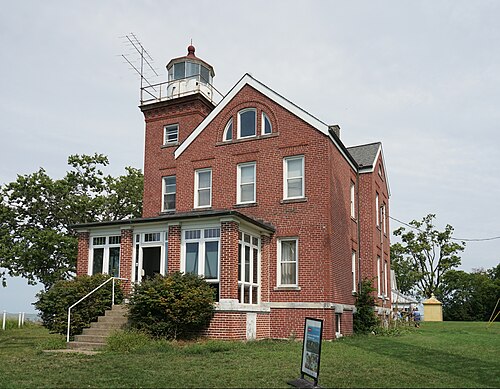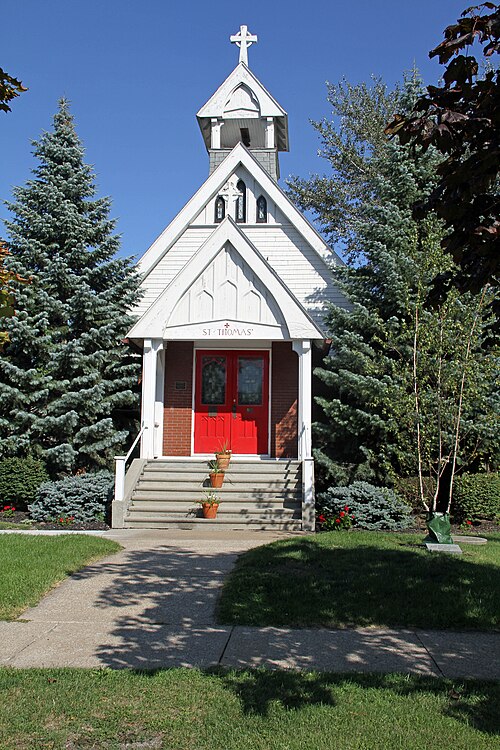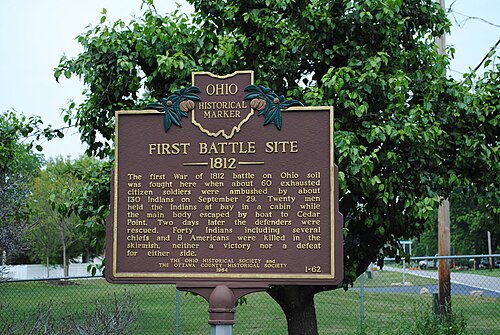
Ottawa County Ohio has 30 places on the National Register of Historic Places including 4 places of National significance and 4 places of Statewide significance. Significant places include Cooke, Jay, House, Johnson Island Civil War Prison and Fort Site, Lakeside Historic District, Perry's Victory and International Peace Memorial and Inselruhe.
Several famous people are associated with these Ottawa County historic places including Jay Cooke and Alexander Clemons.
Some of the country's most noteable architects helped create the Ottawa County places including Freelander & Seymour, Wadley & Smythe, Col. William H. Hoffman, David Henry Overman, William Kelley, Gluss Brothers, George E. Gascoyne, Henry Luckert, James Young and Henry Blocker. Prominent architectural styles found in Ottawa Country are Italianate, Greek Revival and Romanesque.
Historic Significance:
Person
Historic Person:
Cooke,Jay
Significant Year:
1904, 1865
Area of Significance:
Commerce, Industry
Period of Significance:
1900-1924, 1875-1899, 1850-1874
Historic Function:
Domestic
Historic Sub-function:
Village Site
Current Function:
Education
Current Sub-function:
College
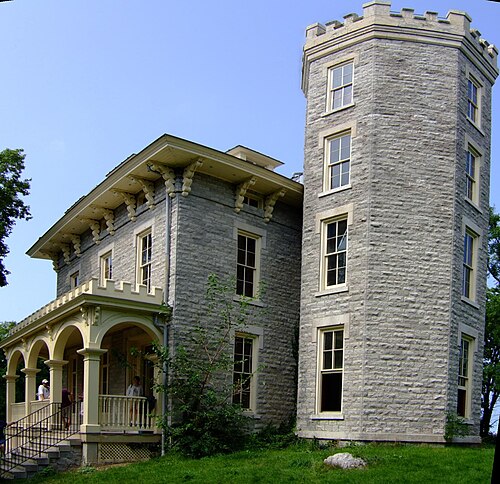
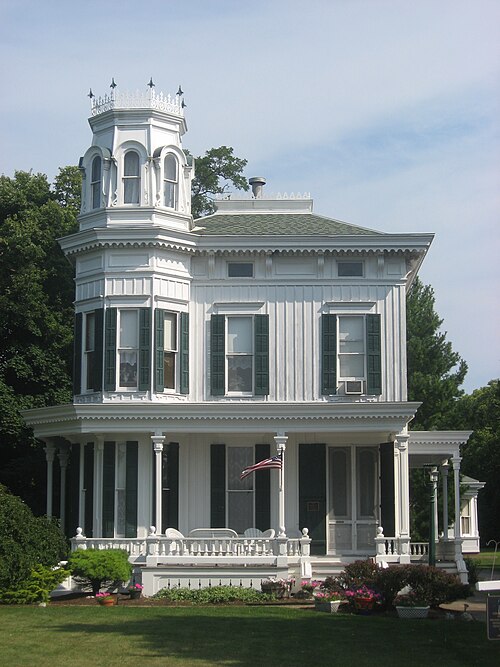
The Jay Cooke House, also known as Cooke Castle, is a striking Victorian Gothic Revival mansion situated on Gibraltar Island in Lake Erie, within Ottawa County, Ohio. Constructed between 1864 and 1865, the sprawling stone villa features a prominent four-story octagonal tower, expansive verandas, and rugged limestone walls quarried directly from the island itself. It was built as a summer retreat for Jay Cooke, the preeminent American financier of the mid-19th century. The house represents a remarkably preserved example of mid-Victorian resort architecture and stands as a physical testament to the immense wealth and influence accumulated by industrial and financial leaders during the Civil War era.
Historically, the property is significant for its direct association with Jay Cooke, whose pioneering efforts in underwriting and marketing Union war bonds financed nearly two-thirds of the Northern war effort, making him a crucial figure in the preservation of the United States. Following the war, Cooke's island estate became a celebrated retreat and a notable gathering place for some of the nation's most prominent political and military leaders, including Salmon P. Chase, William Tecumseh Sherman, and future president Rutherford B. Hayes. In 1925, the island and the mansion were acquired by Ohio State University, transitioning the site into the Franz Theodore Stone Laboratory, the nation's oldest freshwater biological field station. For its national significance in American economic history, the Jay Cooke House was designated a National Historic Landmark in 1966.
Historic Significance:
Information Potential, Event
Area of Significance:
Military, Historic - Non-Aboriginal
Cultural Affiliation:
American Military
Period of Significance:
1850-1874
Historic Function:
Defense, Government
Historic Sub-function:
Correctional Facility, Fortification, Military Facility
Current Function:
Funerary, Recreation And Culture
Current Sub-function:
Cemetery, Monument/Marker, Outdoor Recreation
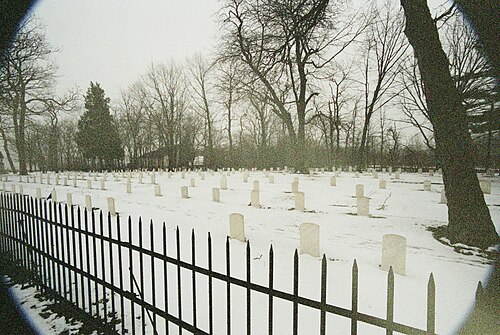
The Johnson's Island Civil War Prison and Fort Site, located on a 300-acre island in Sandusky Bay, Ottawa County, Ohio, holds national significance as the premier Union prisoner-of-war depot dedicated almost exclusively to housing captured Confederate officers. Established in April 1862 and operating until September 1865, the facility processed more than 15,000 prisoners over the course of the American Civil War, maintaining an average daily population of nearly 3,000 inmates. Because of the high status of its population-which included Confederate generals, colonels, and cabinet members-the island was a highly secure installation. Today, the most visible physical legacy of the prison camp is the Confederate Stockade Cemetery, where over 200 prisoners who succumbed to disease and the harsh Lake Erie winters are buried, overseen by a monumental bronze statue of a Confederate soldier erected in 1910.
Beyond its role as a stockade, the site is historically significant for its defensive military architecture and its association with dramatic wartime conspiracy plots. To protect the prison from both internal uprisings and external rescue attempts launched from nearby Canada, Union forces constructed robust earthen fortifications on the island, including Fort Johnson and Fort Hill. The island was the target of one of the war's most audacious rescue attempts in September 1864, when Confederate agents led by John Yates Beall hijacked the passenger steamer Philo Parsons in a failed bid to capture the USS Michigan, the Union's only ironclad warship on the Great Lakes, and liberate the island's prisoners. As a remarkably preserved archaeological site, Johnson's Island has yielded invaluable subterranean evidence regarding prisoner material culture, prison-life adaptation, and guard-prisoner relations, earning it designation as a National Historic Landmark.
Historic Significance:
Event, Architecture/Engineering
Architectural Style:
Stick/Eastlake, Gothic
Area of Significance:
Architecture, Community Planning And Development, Social History, Religion
Period of Significance:
1925-1949, 1900-1924, 1875-1899
Historic Function:
Domestic, Health Care, Religion, Social
Historic Sub-function:
Camp, Church Related Residence, Meeting Hall, Resort
Current Function:
Commerce/Trade, Domestic, Health Care, Recreation And Culture
Current Sub-function:
Resort, Single Dwelling
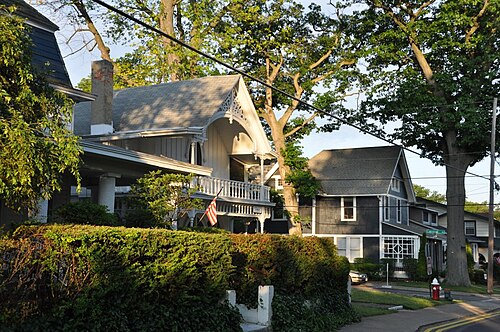
Established in 1873 by Methodist ministers and laymen as a camp meeting site, the Lakeside Historic District is nationally significant as one of the earliest, most successful, and most enduring Chautauqua communities in the United States. Situated on the Marblehead Peninsula along the shores of Lake Erie, the community adopted the formal Chautauqua program in 1877, blending spiritual devotion, educational lectures, cultural arts, and outdoor recreation. Often referred to as "The Chautauqua on Lake Erie," Lakeside served as a vital cultural oasis for the Midwest, drawing thousands of summer visitors annually who sought intellectual and spiritual enrichment. Its historical significance is deeply rooted in its role as a premier center of the Chautauqua movement-a uniquely American educational and religious phenomenon that flourished during the late nineteenth and early twentieth centuries.
The physical layout and architecture of the Lakeside Historic District vividly reflect its evolution from a rustic, seasonal tent-camp to a permanent Victorian-era resort town. The district encompasses hundreds of closely spaced wooden cottages exhibiting a rich variety of late nineteenth- and early twentieth-century architectural styles, including Queen Anne, Gothic Revival, Carpenter Gothic, and Craftsman. Key contributing landmarks include the grand Hotel Lakeside (1875), the historic Administration Building, and the monumental 3,000-seat Hoover Auditorium, which continues to serve as the community's cultural anchor. Characterized by narrow streets, mature tree canopies, and cottages adorned with intricate gingerbread trim and expansive front porches, the district stands as an exceptionally well-preserved example of a turn-of-the-century planned religious and educational community.
Historic Significance:
Event, Architecture/Engineering
Architect, builder, or engineer:
Freelander & Seymour, Wadley & Smythe
Area of Significance:
Military, Engineering
Period of Significance:
1925-1949, 1900-1924, 1800-1824
Historic Function:
Defense
Historic Sub-function:
Battle Site
Current Function:
Landscape, Recreation And Culture
Current Sub-function:
Monument/Marker, Park
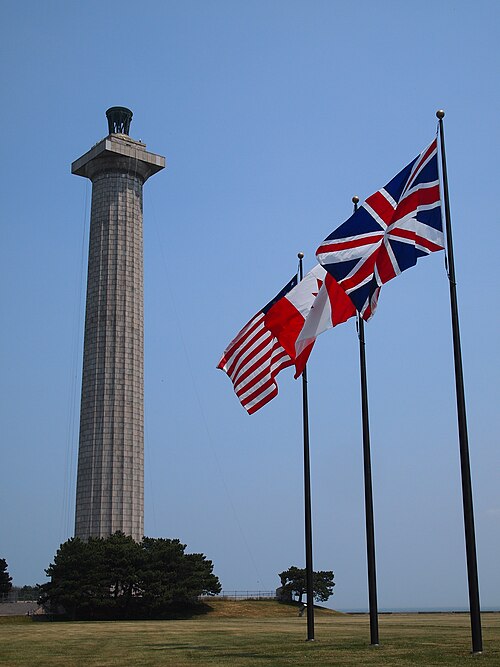
Established to honor one of the most decisive naval engagements of the War of 1812, Perry's Victory and International Peace Memorial stands as a towering tribute on South Bass Island in Put-in-Bay, Ohio. Designed by architects Joseph H. Freelander and A.D. Seymour and constructed between 1912 and 1915, the monument features a colossal 352-foot-tall pink granite Doric column-the world's most massive-topped by a monumental bronze urn. It marks the location near where Commodore Oliver Hazard Perry led the American fleet to a crucial victory over the British Royal Navy in the Battle of Lake Erie on September 10, 1813. This triumph secured American control of the lake, safeguarded the Northwest Territory, and reinvigorated the nation's wartime morale.
Beyond its military significance, the memorial serves a profound dual purpose by celebrating the enduring peace and disarmament negotiated along the United States-Canada border following the War of 1812. Underneath the rotunda of the monument's grand plaza lie the remains of three British and three American officers who perished in the battle, interred together to represent reconciliation and lasting friendship between former adversaries. As a National Monument and a symbol of international harmony, the site reflects the shared commitment of the United States, Great Britain, and Canada to peaceful diplomacy and cooperation, making it a unique monument to peace born from the ashes of conflict.