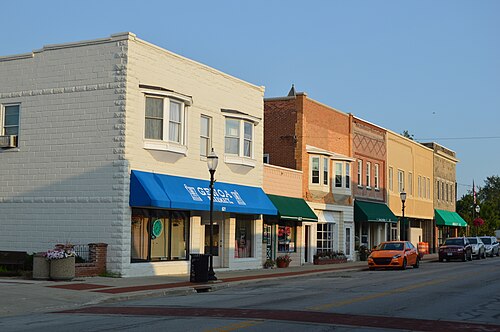
Ottawa County Ohio (Historic Districts) has 4 places on the National Register of Historic Places including 1 place of National significance. Significant places include Lakeside Historic District, East Point Manor, Main Street Historic District, Middle Bass Club Historic District.
Some of the country's most noteable architects helped create the Ottawa County places including J. Milton Dyer and Alfred Schnurr. Prominent architectural styles found in Ottawa Country are Chicago, Gothic and Italianate.
Historic Significance:
Event, Architecture/Engineering
Architectural Style:
Stick/Eastlake, Gothic
Area of Significance:
Architecture, Community Planning And Development, Social History, Religion
Period of Significance:
1925-1949, 1900-1924, 1875-1899
Historic Function:
Domestic, Health Care, Religion, Social
Historic Sub-function:
Camp, Church Related Residence, Meeting Hall, Resort
Current Function:
Commerce/Trade, Domestic, Health Care, Recreation And Culture
Current Sub-function:
Resort, Single Dwelling
Established in 1873 by Methodist ministers and laymen as a camp meeting site, the Lakeside Historic District is nationally significant as one of the earliest, most successful, and most enduring Chautauqua communities in the United States. Situated on the Marblehead Peninsula along the shores of Lake Erie, the community adopted the formal Chautauqua program in 1877, blending spiritual devotion, educational lectures, cultural arts, and outdoor recreation. Often referred to as "The Chautauqua on Lake Erie," Lakeside served as a vital cultural oasis for the Midwest, drawing thousands of summer visitors annually who sought intellectual and spiritual enrichment. Its historical significance is deeply rooted in its role as a premier center of the Chautauqua movement-a uniquely American educational and religious phenomenon that flourished during the late nineteenth and early twentieth centuries.
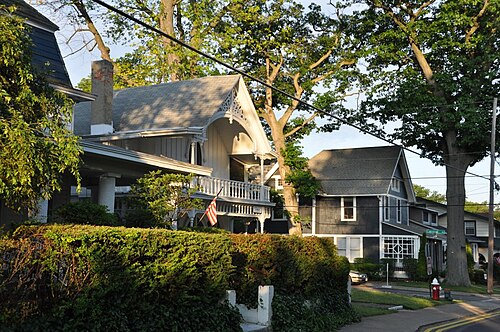
The physical layout and architecture of the Lakeside Historic District vividly reflect its evolution from a rustic, seasonal tent-camp to a permanent Victorian-era resort town. The district encompasses hundreds of closely spaced wooden cottages exhibiting a rich variety of late nineteenth- and early twentieth-century architectural styles, including Queen Anne, Gothic Revival, Carpenter Gothic, and Craftsman. Key contributing landmarks include the grand Hotel Lakeside (1875), the historic Administration Building, and the monumental 3,000-seat Hoover Auditorium, which continues to serve as the community's cultural anchor. Characterized by narrow streets, mature tree canopies, and cottages adorned with intricate gingerbread trim and expansive front porches, the district stands as an exceptionally well-preserved example of a turn-of-the-century planned religious and educational community.