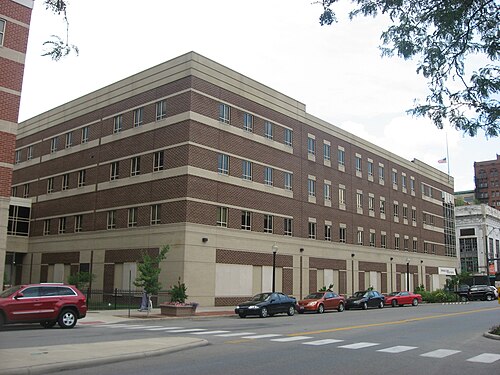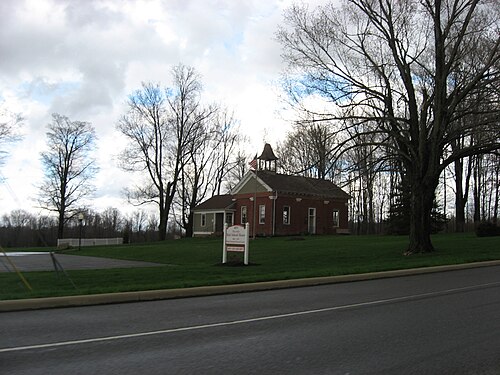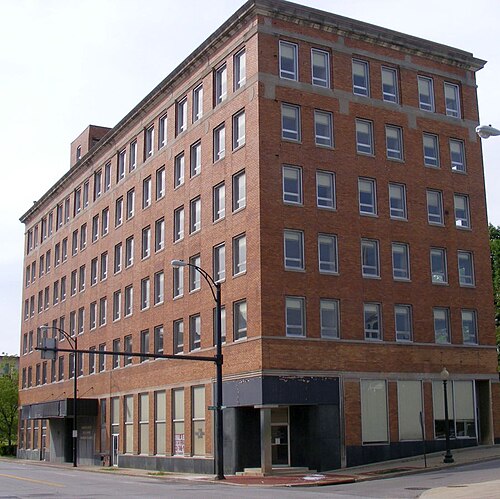
Mahoning County Ohio has 50 places on the National Register of Historic Places including 1 place of National significance and 19 places of Statewide significance. Significant places include McGuffey, William H., Boyhood Home Site, Butler Institute Of American Art, City Hall Annex, Erie Terminal Building--Commerce Plaza Building and Helen Chapel.
Many famous people are associated with these Mahoning County historic places including William H. McGuffey, Jared P. Kirtland, John Butler, Harry B. Burt, William Shaw Anderson and Eben Newton.
Some of the country's most noteable architects helped create the Mahoning County places including Barton E. Brooke, Charles H. Owsley, A.L. Thayer, Charles F. Owsley, Cook & Canfield, Brook & Dyer, Adolph Kanegeiser, Paul Boucherle, Daniel & John Eaton and Brooke & Dyer et al.. Prominent architectural styles found in Mahoning Country are Classical Revival, Colonial Revival and Greek Revival.
Historic Significance:
Person
Historic Person:
McGuffey,William H.
Significant Year:
1818, 1802
Area of Significance:
Literature
Period of Significance:
1800-1824
Historic Function:
Domestic
Historic Sub-function:
Single Dwelling
Current Function:
Agriculture/Subsistence
Current Sub-function:
Agricultural Fields
The William H. McGuffey Boyhood Home Site is nationally significant for its direct association with William Holmes McGuffey (1800?1873), the educator and author who created the McGuffey Eclectic Readers. First published in 1836, these landmark textbooks revolutionized American primary education, selling over 120 million copies and shaping the literacy, moral character, and cultural values of generations of school children across the expanding United States. McGuffey lived on this frontier homestead in Mahoning County from 1802, when his family moved there during his infancy, until 1818. The rigorous, rural upbringing he experienced on this site profoundly influenced his educational philosophy, fostering the self-reliance, discipline, and democratic ideals that he later woven into his widely influential readers.
Located in Coitsville Township, the site was designated a National Historic Landmark in 1966. While the original log cabin in which McGuffey grew up was purchased and relocated to Greenfield Village in Dearborn, Michigan, by industrialist Henry Ford in 1934, the Ohio property remains a sacred landscape dedicated to McGuffey's formative years. Today, the preserved site features a stone memorial and interpretive markers amidst a peaceful, wooded setting. It stands as a vital commemorative site of American intellectual history, marking the birthplace of an educational legacy that bridged the gap between pioneering frontier life and the formalized school systems of the 19th century.