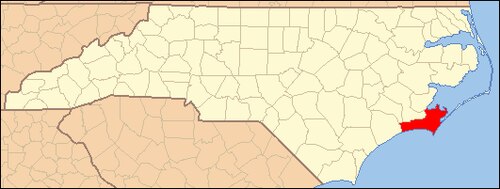
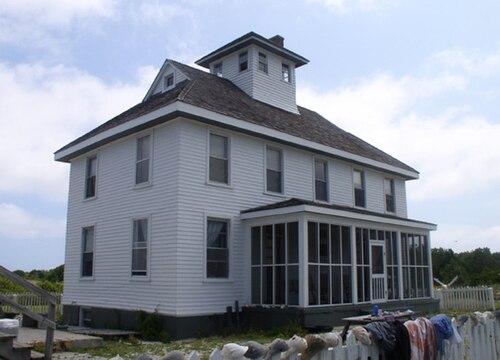
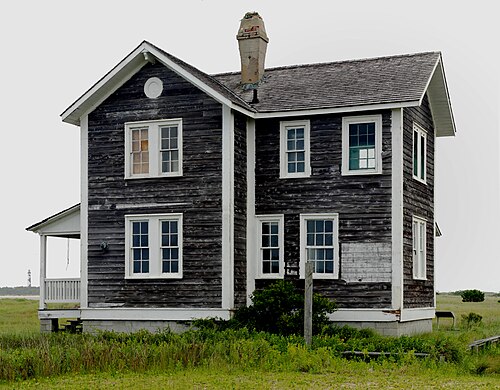
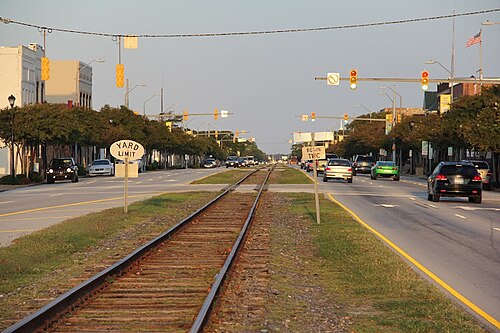
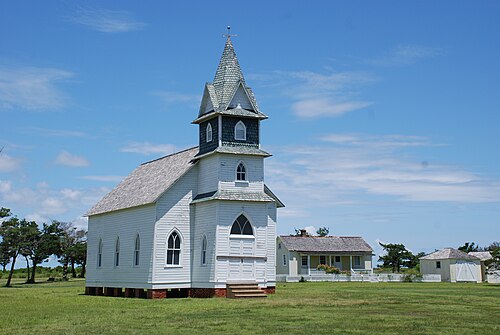
Carteret County North Carolina (Historic Districts) has 5 places on the National Register of Historic Places including 1 place of National significance and 3 places of Statewide significance. Significant places include Beaufort Historic District, Cape Lookout Coast Guard Station, Cape Lookout Village Historic District and Portsmouth Village and Morehead City Historic District.
Some of the country's most noteable architects helped create the Carteret County places including Herbert Woodley Simpson, W.J.B. Shull and Inc Atwood and Nash. Prominent architectural styles found in Carteret Country are Queen Anne, Bungalow/Craftsman and Classical Revival.
Historic Significance:
Event, Architecture/Engineering
Architect, builder, or engineer:
Simpson,Herbert Woodley
Architectural Style:
Gothic Revival, Queen Anne, Greek Revival
Area of Significance:
Science, Transportation, Architecture, Commerce, Community Planning And Development, Military
Period of Significance:
1900-1924, 1875-1899, 1850-1874, 1825-1849, 1800-1824, 1750-1799, 1700-1749
Historic Function:
Commerce/Trade, Domestic
Historic Sub-function:
Single Dwelling
Current Function:
Commerce/Trade, Domestic
Current Sub-function:
Single Dwelling
Established in 1709 and incorporated in 1723, the Beaufort Historic District encompasses the historic core of North Carolina's third-oldest town. Platted in 1713, the town's original grid plan remains largely unaltered, reflecting its development as a premier colonial seaport, fishing hub, and the seat of Carteret County. Beaufort's strategic location along the Taylor's Creek waterfront facilitated a prosperous maritime economy rooted in shipping, shipbuilding, commercial fishing, and whaling. This coastal heritage shaped the town's growth through the 18th, 19th, and early 20th centuries, establishing it as a vital hub of trade and communication along the Outer Banks and a key player in the state's early maritime history.
Architecturally, the district is highly significant for its remarkably intact collection of residential, commercial, and civic buildings that document the evolution of coastal North Carolina architecture. Prominent among these are the distinctive "Beaufort-style" houses-vernacular coastal cottages featuring sweeping gable roofs, sturdy timber framing, and double-tiered inset porches designed to capture sea breezes. Interspersed among these vernacular dwellings are excellent refined examples of Federal, Greek Revival, and Queen Anne styles, which served as homes for sea captains, merchants, and local officials. Notable landmarks within the district include the Old Burying Ground, established in the early 18th century and shaded by ancient live oaks, and the historic Carteret County courthouse square, which collectively preserve the rich material culture and seafaring ambiance of a historic Southern port town.