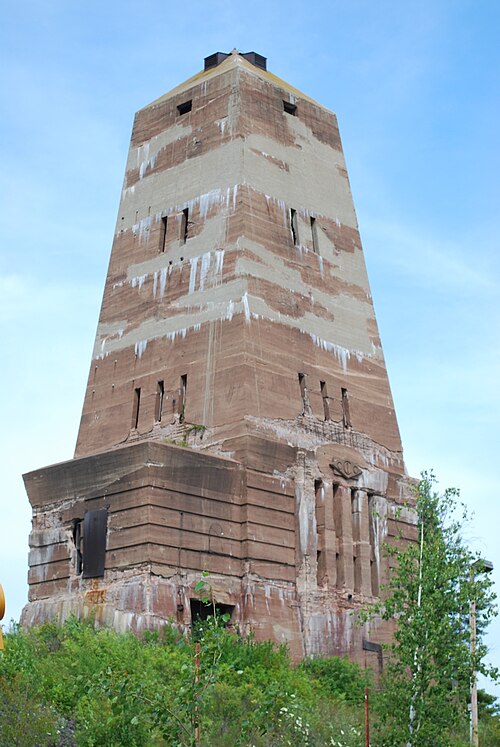
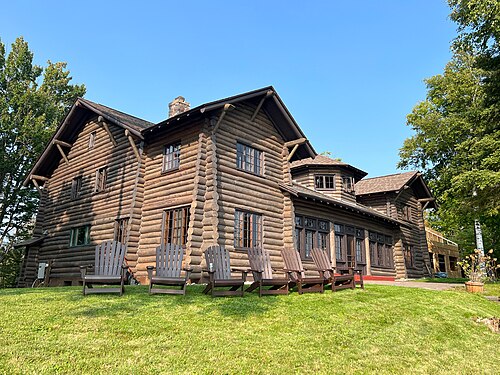
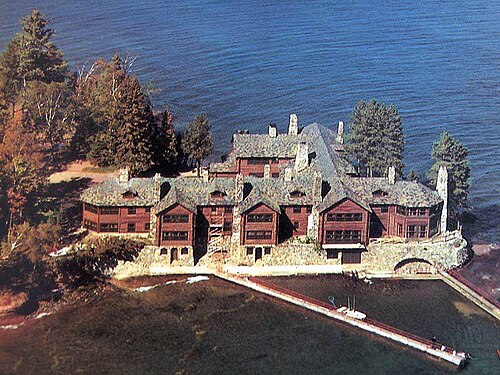
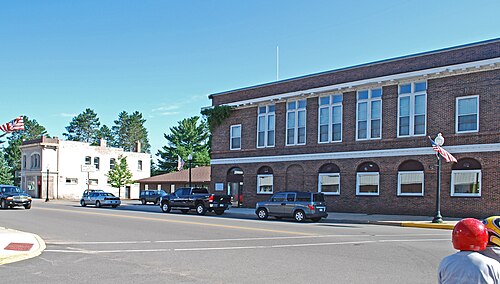
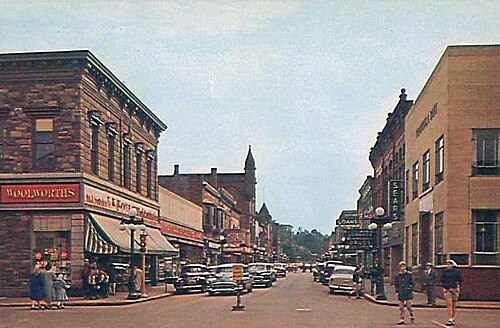
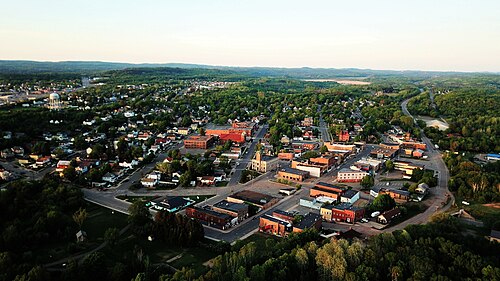
Marquette County Michigan (Historic Districts) has 8 places on the National Register of Historic Places including 3 places of National significance and 1 place of Statewide significance. Significant places include Cliffs Shaft Mine, Granot Loma, Gwinn Model Town Historic District and Cohodas, Sam, Lodge and Arch and Ridge Streets Historic District.
Several famous people are associated with these Marquette County historic places including William G. Mather, Louis G. Kaufman, Sam Cohodas and Peter White.
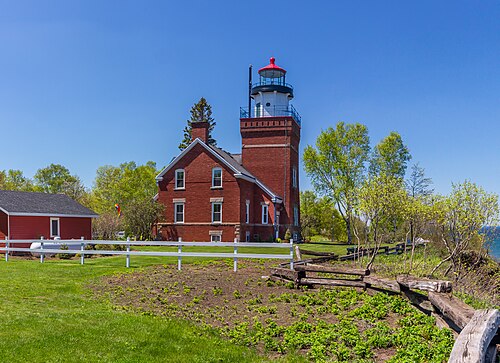
Some of the country's most noteable architects helped create the Marquette County places including D. Fred Charlton, Louden Machinery Co., Marshall & Fox, Ward Manning, George W. Maher, David E. Anderson, Nestor Kallioinen, US Lighthouse Establishment and 11th District Light-House Engineer. Prominent architectural styles found in Marquette Country are Bungalow/Craftsman, Exotic Revival and Gothic.
Historic Significance:
Event, Person, Architecture/Engineering
Architect, builder, or engineer:
Charlton, D. Fred, Manning, Ward
Architectural Style:
Bungalow/Craftsman
Historic Person:
Mather, William G.
Significant Year:
1907, 1933, 1946
Area of Significance:
Community Planning And Development, Landscape Architecture, Industry
Period of Significance:
1925-1949, 1900-1924
Owner:
Federal, Private, Local
Historic Function:
Commerce/Trade, Domestic, Landscape
Historic Sub-function:
Business, Multiple Dwelling, Plaza, Single Dwelling
Current Function:
Commerce/Trade, Domestic, Landscape
Current Sub-function:
Business, Multiple Dwelling, Plaza, Single Dwelling
Most turn-of-the-century mining camps were miserable. They were chaotic shantytowns smelling of open sewage and sulfur. William Gwinn Mather hated that. As president of the Cleveland-Cliffs Iron Company, he wanted stable, married miners who wouldn't strike or drink themselves to death. So, in 1907, he hired Warren H. Manning, a disciple of legendary designer Frederick Law Olmsted, to build a town from scratch near the Escanaba River. He named it Gwinn. Manning rejected the cheap, cookie-cutter grid systems of other company towns. Instead, he saved the old-growth jack pines and curved the streets around the natural topography. He even buried the utility lines. This was a radical, expensive choice in 1907.
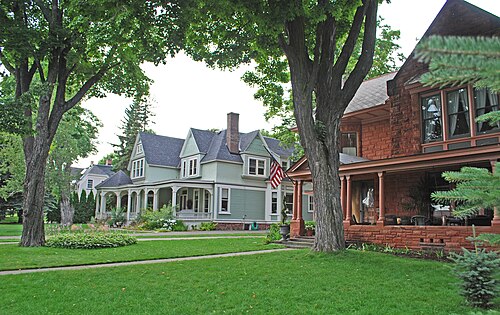
Actually, the whole project was an experiment in social engineering. Cleveland-Cliffs built over 200 homes. They used Tudor, Colonial Revival, and English cottage styles so the streets wouldn't look monotonous. Class divides existed, though. Superintendents lived in larger houses on the hills, while Finnish and Italian laborers occupied smaller cottages near the mines. Yet everyone shared the same green spaces. The local Association Building became the heart of the community. Built in 1911 for $75,000, it featured a swimming pool, a bowling alley, and a library. It kept workers clean and sober. Eventually, though, the iron ran out. By the 1940s, Cleveland-Cliffs began selling the homes to the workers. Today, Gwinn remains a remarkably intact relic of corporate paternalism. A manufactured paradise in the wild Upper Peninsula.