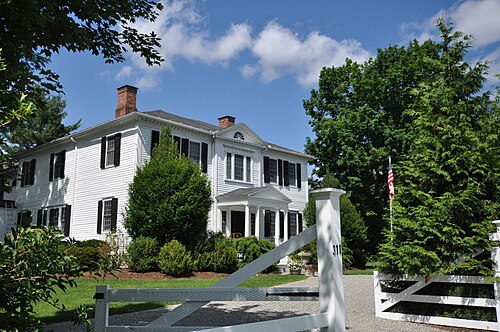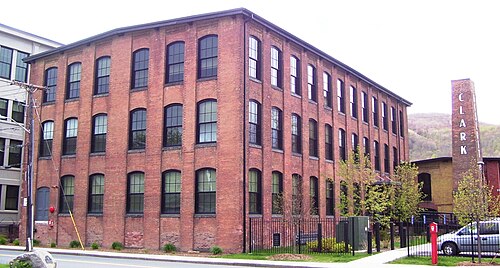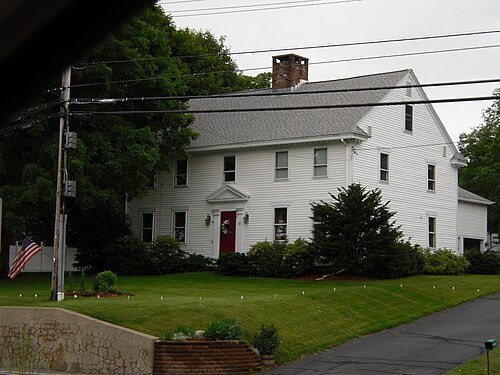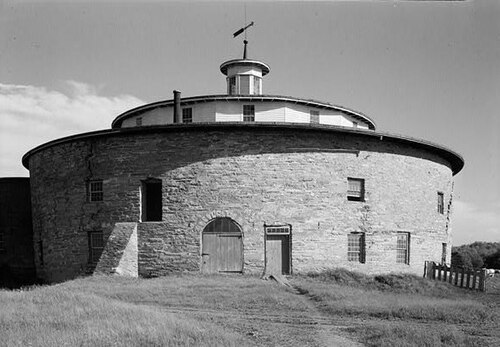
Berkshire County Massachusetts (Page 2) has 50 places on the National Register of Historic Places including 6 places of National significance and 8 places of Statewide significance. Significant places include Goodwood, Hancock Shaker Village, Jacob's Pillow Dance Festival, Jacob's Pillow Dance Festival and Melville, Herman, House.
Many famous people are associated with these Berkshire County historic places including Herman Melville, Ted Shawn, Edwin Myers "Ted" Shawn, Samuel Harrison, Major General Joseph Whiton and Alvan et al. Hyde.
Some of the country's most noteable architects helped create the Berkshire County places including Capt. David Bush, Franz, Joseph, et al., Joseph Franz, Sergeant John, Eldad Lewis, George Washington Whistler, Capt. Isaac et al. Damon, Frank Beebe, Berlin Iron Bridge Co. and James Bryning. Prominent architectural styles found in Berkshire Country are Federal, Greek Revival and Georgian.
Historic Significance:
Event, Person, Architecture/Engineering
Architect, builder, or engineer:
Franz, Joseph
Architectural Style:
Bungalow/Craftsman, Federal
Historic Person:
Shawn, Ted
Area of Significance:
Architecture, Performing Arts, Agriculture
Period of Significance:
1950-1974, 1925-1949, 1900-1924, 1875-1899, 1850-1874, 1825-1849, 1800-1824, 1750-1799
Historic Function:
Agriculture/Subsistence, Domestic, Recreation And Culture
Historic Sub-function:
Agricultural Fields, Agricultural Outbuildings, Institutional Housing, Single Dwelling, Theater
Current Function:
Agriculture/Subsistence, Domestic, Recreation And Culture
Current Sub-function:
Agricultural Fields, Institutional Housing, Theater
Ted Shawn bought a rundown, rocky 18th-century family farm in Becket back in 1931. He paid $9,000. Cheap retreat. But Shawn, a pioneer of American modern dance, turned the place into a battleground against the era's deep-seated homophobia and rigid gender norms. He brought his all-male dance troupe there in 1933. They did hard labor. They cleared pine forests, split heavy oak logs, and raised barns with their bare hands. Shawn wanted to prove that dance was rigorous, athletic work. Locals loved it. They actually paid seventy-five cents each to watch these shirtless, muscular athletes perform outdoor "Tea Lectures" on weekends. Revolutionary stuff.
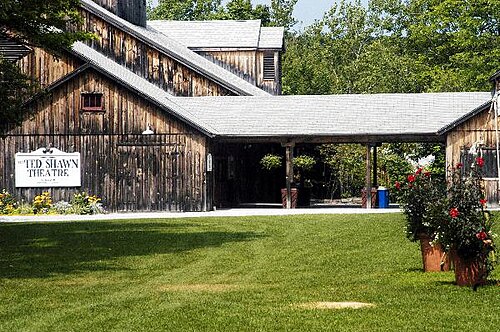
Then came the Ted Shawn Theatre in 1942. It was the first performance space in the United States constructed specifically for dance. Architect Joseph Franz used raw hemlock to make it look like a barn. Inside lay a state-of-the-art stage. Over the decades, absolute legends of modern dance-including Martha Graham, Merce Cunningham, and Katherine Dunham-tested their wild new ideas on those creaky pine floorboards. It became a sanctuary. International artists fleeing war or political censorship found a safe, sweaty haven in the Berkshires. So, the federal government designated it a National Historic Landmark in 2003. Not just some artsy summer camp. This place is the literal cradle of American concert dance.