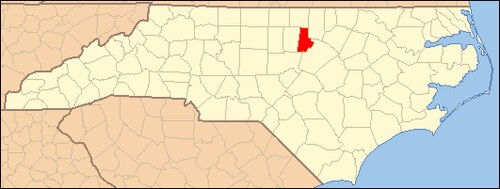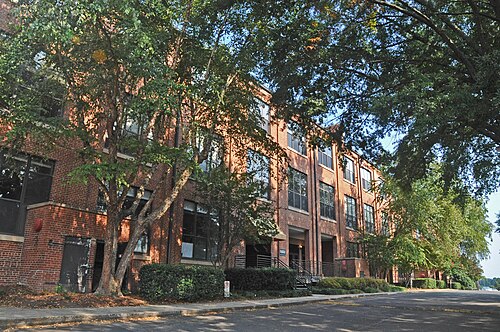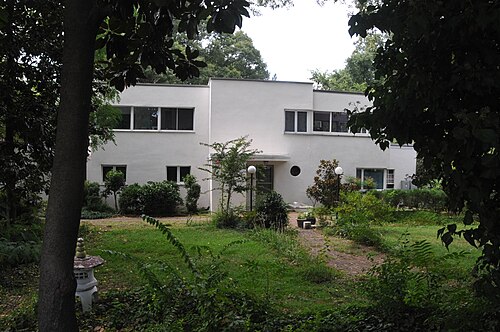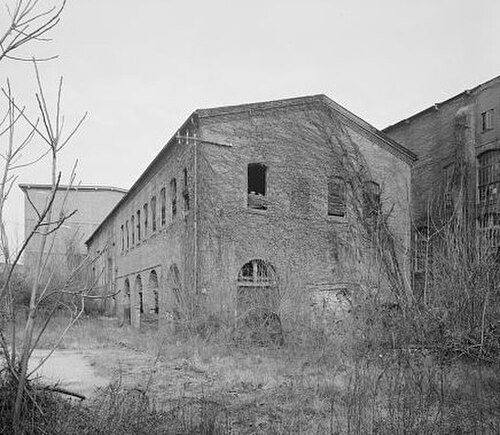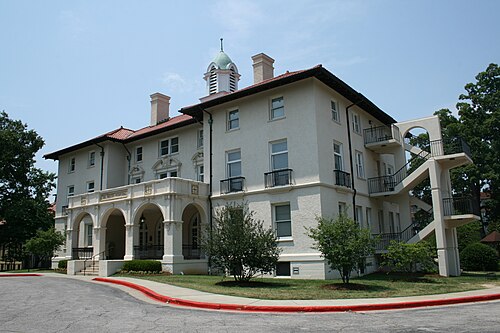
Durham County North Carolina (Vacant / Not In Use) has 10 places on the National Register of Historic Places including 2 places of National significance and 3 places of Statewide significance. Significant places include American Tobacco Company Manufacturing Plant, Durham Hosiery Mill, American Tobacco Company Manufacturing Plant, Dillard-Gamble Houses and Watts Hospital.
Prehistoric cultural affiliation(s) include Early Woodland dating back to 999 BC.
Several famous people are associated with these Durham County historic places including Carr, Julian S., Jr., Richard E. Dillard, Julian S. Carr and W.H. Pegram.
Some of the country's most noteable architects helped create the Durham County places including Greene & Rogers, Kendall & Taylor, George Watts Carr, Milburn & Heister and T.S. Christian. Prominent architectural styles found in Durham Country are Romanesque, Bungalow/Craftsman and Colonial Revival.
Historic Significance:
Event, Architecture/Engineering
Architectural Style:
Romanesque, Italianate
Area of Significance:
Industry, Architecture
Period of Significance:
1950-1974, 1925-1949, 1900-1924, 1875-1899, 1850-1874
Historic Function:
Industry/Processing/Extraction
Historic Sub-function:
Energy Facility, Manufacturing Facility, Storage
Current Function:
Vacant/Not In Use
James "Buck" Duke wanted total control. In the late 1880s, his American Tobacco Company bought the Blackwell's Bull Durham site. He installed the Bonsack machine. This mechanical beast spat out 120,000 cigarettes a day, replacing skilled hand-rollers. Durham became "Bull City." Black and white workers labored in segregated, soot-stained rooms, breathing in sweet molasses and stinging tobacco dust. It was grueling labor. Still, the money poured in, funding Duke University and shaping North Carolina's political power structure for decades.
The luck eventually ran out. In 1987, the machinery went quiet, leaving millions of square feet of brick empty. Vines choked the Lucky Strike chimney. Most folks assumed the wrecking ball would eventually clear the blight. But developers stepped in. A massive three-hundred-million-dollar overhaul transformed the abandoned factory into a tech hub and entertainment district. They kept the historic bones. Now, tech workers drink craft beer under the same heart-pine beams where sharecroppers once dumped raw tobacco leaves. It is a wild juxtaposition.