San Francisco County California (Page 4) has 50 places on the National Register of Historic Places including 10 places of National significance and 9 places of Statewide significance. Significant places include SS JEREMIAH O'BRIEN National Historic Landmark, SS RIO DE JANEIRO Shipwreck, San Francisco Cable Cars, San Francisco Civic Center Historic District and San Francisco Port of Embarkation, US Army.
The famous person Joseph Worcester is associated with one of more of the San Francisco County historic places.
Some of the country's most noteable architects helped create the San Francisco County places including Bernard Maybeck, Charles H. Purcell, John Roach, Gilbert Stanlay Underwood, New York Shipbuilding Corp., Andrew, Charles E., et al., Andrew Hallidee, Portsmouth Naval Shipyard, A. Page Brown and William S. Eames. Prominent architectural styles found in San Francisco Country are Late 19th And 20th Century Revivals, Italianate and Mission/Spanish Revival.
Historic Significance:
Architecture/Engineering, Event
Architect, builder, or engineer:
Andrew, Charles E., et al., Purcell, Charles H.
Area of Significance:
Engineering, Architecture
Historic Function:
Transportation
Historic Sub-function:
Rail-Related, Road-Related
Current Function:
Transportation
Current Sub-function:
Road-Related
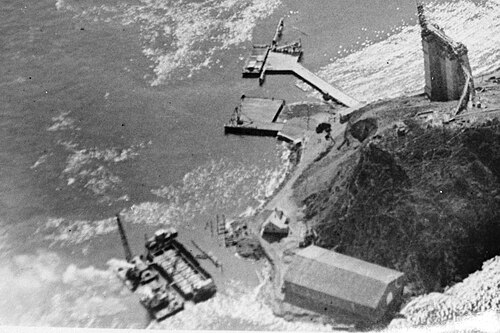
People forget the Bay Bridge came first. It beat the Golden Gate by six months. To build it, divers plunged 242 feet into the dark, freezing mud of the bay to sink massive caissons, shattering depth records. Twenty-eight men died. Chief engineer Charles Purcell faced a nightmare of deep water, treacherous currents, and unstable mud. But he pulled it off. The double-decker giant opened in November 1936, boasting the world's largest bore tunnel through Yerba Buena Island.
Before the bridge, commuters relied entirely on slow, crowded ferries. The crossing killed that industry. Actually, it welded San Francisco and Oakland into a single economic powerhouse. Then came the trains. The Interurban electric lines carried millions of commuters on the lower deck until highway greed cleared them out in 1958. It was pure Depression-era muscle. Funded by federal Reconstruction Finance Corporation loans, the construction project put thousands of desperate, jobless men back to work. The western suspension span still stands as a monumental workhorse.