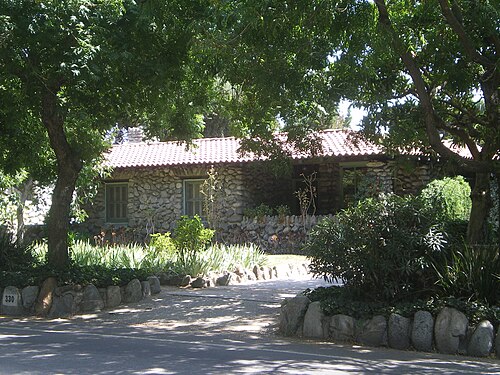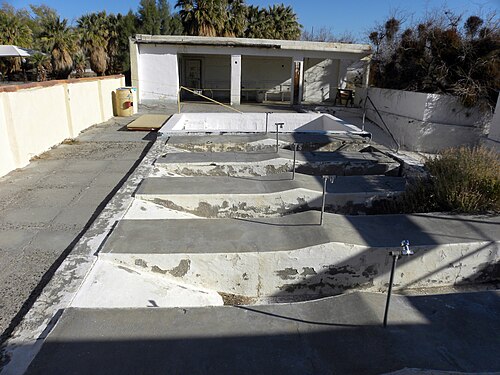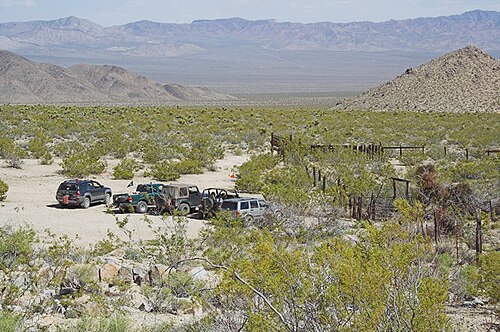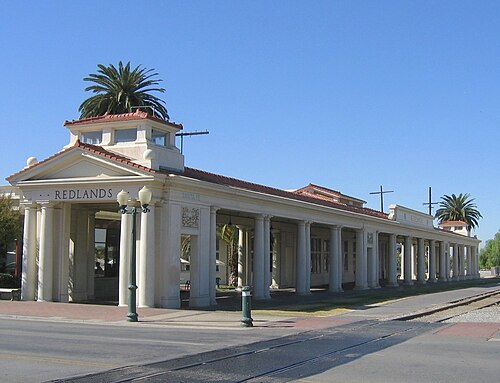
San Bernardino County California (Historic Districts) has 33 places on the National Register of Historic Places including 4 places of National significance and 9 places of Statewide significance. Significant places include Black Canyon--Inscription Canyon--Black Mountain Rock Art District, Calico Mountains Archeological District, Mojave Road, Squaw Spring Archeological District and Aiken's Wash National Register District.
Prehistoric cultural affiliation(s) include California Indians, Early Archaic, Et Al., Late Prehistoric, Paleoindian, Great Basin Archaic, Kawaiisu/Numic, American Indian, Mojave, Chemehuevi and Shoshonean dating back to 8999 BC.
The famous person William F. Keys is associated with one of more of the San Bernardino County historic places.
Some of the country's most noteable architects helped create the San Bernardino County places including UP Office of the Chief Engineer, Los Angeles and Salt Lake R.R., San Bernardino School District, LASLRR Office of the Chief Engineer, William F. Keys, Konstany Stys, Garrett Huizing, James McHaney, Bill McHaney and Arthur B. Benton. Prominent architectural styles found in San Bernardino Country are Bungalow/Craftsman, Classical Revival and Colonial Revival.
Historic Significance:
Information Potential, Architecture/Engineering
Area of Significance:
Religion, Prehistoric, Historic - Aboriginal, Art
Cultural Affiliation:
Early Archaic, Et Al., Late Prehistoric, Paleoindian
Period of Significance:
7000-8999 BC, 5000-6999 BC, 3000-4999 BC, 1900-1750 AD, 1749-1500 AD, 1499-1000 AD, 1000-2999 BC, 1000 AD-999 BC
Historic Function:
Agriculture/Subsistence, Domestic, Industry/Processing/Extraction, Recreation And Culture, Religion
Historic Sub-function:
Ceremonial Site, Hotel, Processing Site, Work Of Art (Sculpture, Carving, Rock Art)
Current Function:
Landscape
Current Sub-function:
Unoccupied Land
Deep in the Mojave Desert, north of Barstow, the basalt cliffs of the Black Mountain area hold some of the densest rock art concentrations in California. Native peoples pecked thousands of designs into the dark volcanic crust over a span of roughly 10,000 years. They left behind images of bighorn sheep with exaggerated, curving horns, stylized human figures, and intricate grids. These weren't just random doodles. The Mojave, Chemehuevi, and Kawaiisu peoples utilized these canyons for hunting rituals, vision quests, and puberty rites. Inscription Canyon itself is a tight, narrow corridor where the basalt walls practically crowd in on you. Look closely. You can stand in one spot and count dozens of distinct carvings wrapping around the sun-baked stones.
Archaeologists look at this district to track how hunting tech and spiritual beliefs changed over millennia. For instance, older carvings show hunters using atlatls, or spear throwers. Newer ones show bows and arrows. But this place isn't just an outdoor museum. It remains a sacred space for modern tribal descendants who still visit to connect with their ancestors. Sadly, off-road vehicles and vandals have damaged some of the panels over the decades. So, the federal government stepped in. They added the area to the National Register in 2000 to keep the looters at bay. It remains a massive, silent archive of desert survival. Written in stone.