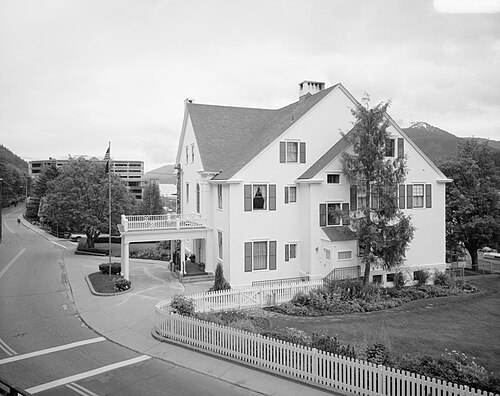
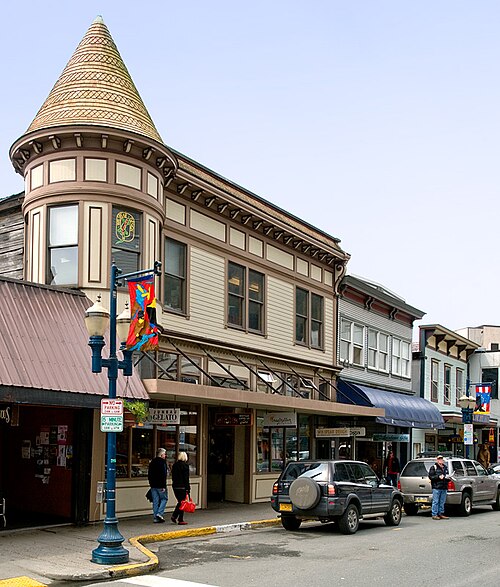
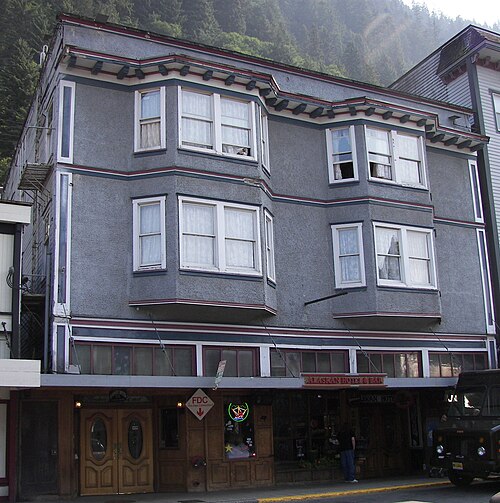
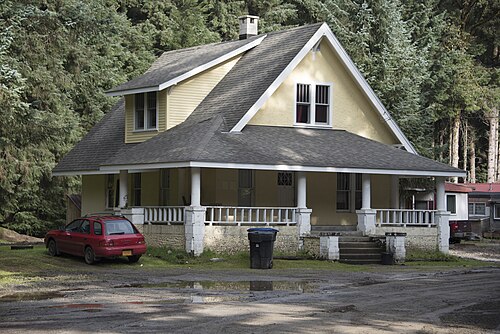
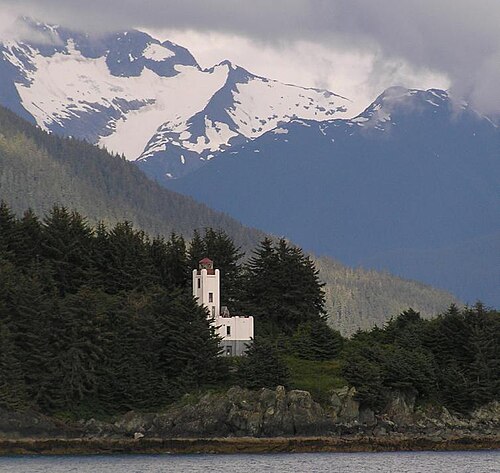
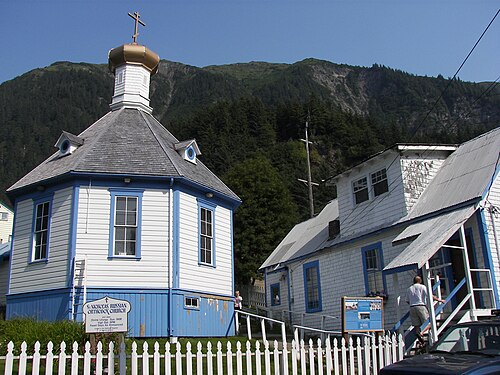
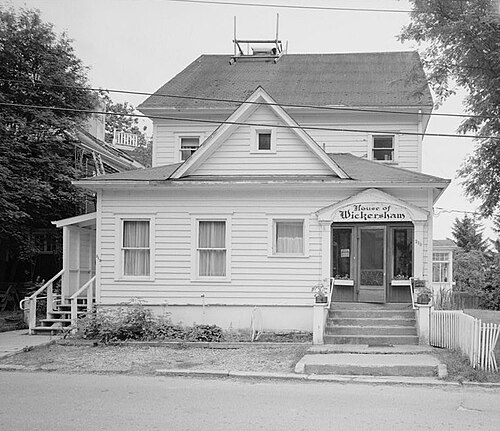
Juneau County Alaska has 28 places on the National Register of Historic Places including 5 places of National significance and 5 places of Statewide significance. Significant places include Alaska Governor's Mansion, Fort Durham Site, Pribilof Aleut Internment Historic District, St. Nicholas Russian Orthodox Church and Wickersham House.
Several famous people are associated with these Juneau County historic places including James V. Wickersham, Ernest Gruening and Marie E. Bergmann.
Some of the country's most noteable architects helped create the Juneau County places including James Douglas, Frank Hammond, William N. Collier, James Knox Taylor, Ross 7 Malcolm, Malcolm MacKay, U.S. Lighthouse Service, Foss & Olsen, George E. James and US Bureau of Indian Affairs. Prominent architectural styles found in Juneau Country are Bungalow/Craftsman, Colonial Revival and Late Victorian.
Historic Significance:
Event
Area of Significance:
Native American, Social History
Period of Significance:
1925-1949
Historic Function:
Domestic, Funerary
Historic Sub-function:
Cemetery, Institutional Housing
Current Function:
Domestic, Funerary
Current Sub-function:
Camp, Cemetery
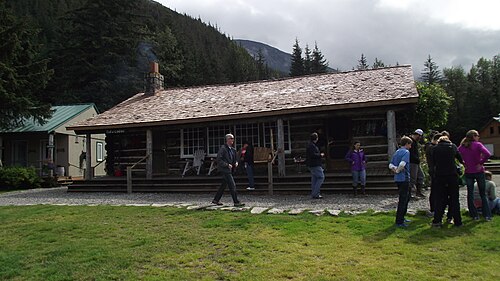
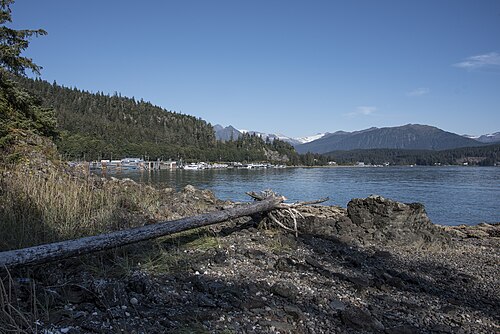
In June 1942, the US military forced 477 Unangax (Aleut) residents from the Pribilof Islands onto a cramped transport ship. They packed just one suitcase each. Officially, the government wanted to protect them from Japanese invaders. Actually, they shipped them into a nightmare of bureaucratic neglect at Funter Bay, where they crammed families into an abandoned, rotting fish cannery and a defunct gold mine without heat, plumbing, or basic medical supplies. The damp Southeast Alaska cold quickly bred tuberculosis, pneumonia, and malnutrition. It killed dozens. Most of the victims were children and elders, who were buried in a makeshift cemetery in the woods. They died of sheer neglect. Meanwhile, the government forced the able-bodied men to return to the Pribilofs during the summer to harvest fur seals for federal profit.
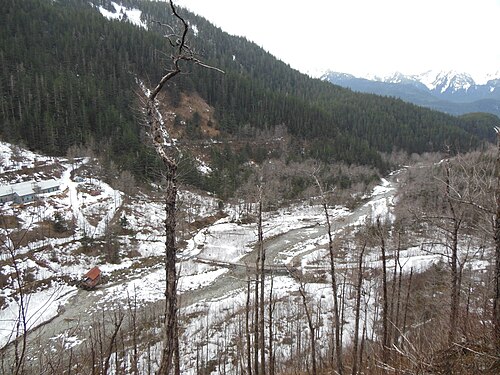
The survivors finally went home in 1945. They found their villages looted and vandalized. The Funter Bay site became a National Register district because these physical ruins keep a dark, suppressed story alive. Decaying cannery pilings and rusting machinery still mark the shoreline. Deep in the wet woods, moss-covered wooden crosses mark the graves of those who never made it back. It is not a monument to a glorious victory. Instead, the district stands as a raw reminder of how the US government stripped its own citizens of their civil rights during wartime hysteria. Congress finally apologized in 1988. But the generational trauma persists to this day.






.jpg)